


A mobile app that shows a child’s weight development in real-time provides greater weight loss compared to conventional care for children with obesity.
Families and healthcare professionals can follow the same data which allows for individualised extra support when needed.
This was shown in a study from Sweden’s Karolinska Institutet published on May 31 in the International Journal of Obesity.
New support
International studies show that frequent follow-up visits, every two weeks, are most effective in maintaining behavioural changes in children and adolescents with obesity.
“But it’s not feasible, neither for the families nor the healthcare system. We, therefore, need to find new ways to provide more support,” said Emilia Hagman.
Hagman is a researcher at the Department of Clinical Science, Intervention and Technology at Karolinska Institutet, who in a study evaluated a new digital tool, a mobile app from the company Evira.
The study is a so-called pragmatic study, which means that the participants were not randomised, but rather, the treatments were evaluated in a real-life clinical setting.
One hundred children who attended the Martina Children’s hospital (Martina Centrum för Vikthälsa) in Stockholm were able to try the digi-physical treatment concept over a period of one year.
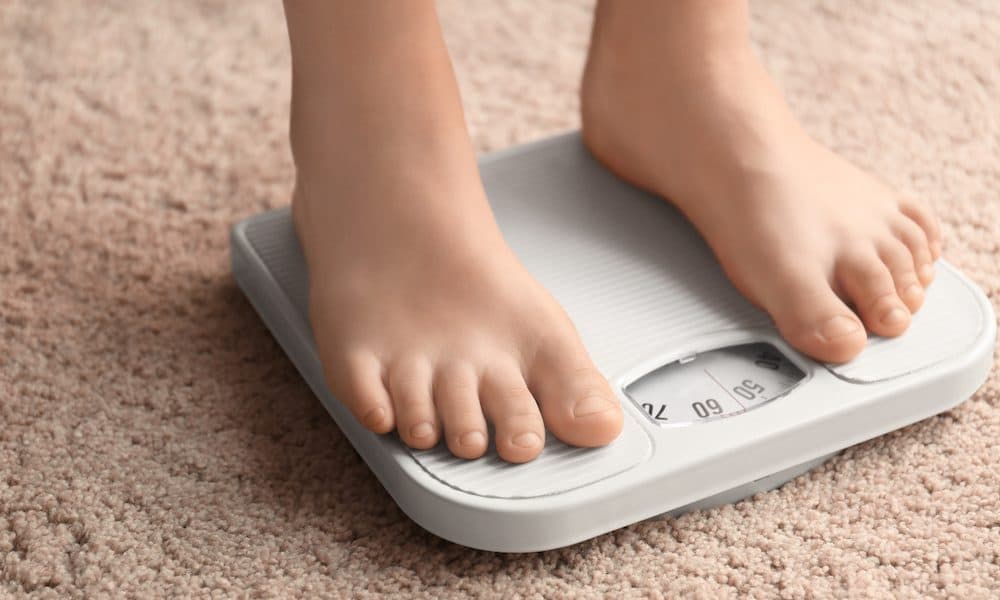
The app was connected to a scale that had no numbers on it, which the child would stand on each day.
In the app, the family saw their child’s weight development as a curve that should be within a green weight target development curve.
The target curve was determined individually and updated during physical visits every three months.
Healthcare professionals had access to the same data. Via a chat function, the healthcare personnel could offer extra support, or the parents could ask for extra support if needed.
Comparisons
To ensure efficacy, these children were compared with 300 children from the Swedish childhood obesity treatment register, BORIS.
They received usual care at other clinics in the country during the same period and were selected randomly but matched in terms of age and sex.
The families who used the app achieved twice as much weight loss compared to the control group.
“This is the first app whereby healthcare professionals, and the family can monitor the child’s weight developement in real-time,” said the study’s last author Pernilla Danielsson Liljeqvist, a researcher at the Department of Clinical Science, Intervention and Technology at Karolinska Institutet.
“It was particularly gratifying that it worked so well for adolescents, who we otherwise have not been able to reach with behaviour-changing therapy.
“The app provides more support through continuous feedback, which creates clarity with regard to the treatment.
“We could not note any side effects associated with the treatment, for example in the form of eating disorders.”
More clinics
One limitation of the study is that it was carried out in only one clinic. There is also a lack of data as to how many physical visits the people in the control group had.
“We know that the paediatric obesity treatment in Sweden is focused on behavioural change and the control group’s results are in line with BORIS’ annual report and major international reviews,” said Pernilla Danielsson Liljeqvist.
“A calculation of the cost of the treatment was also not included. We must first know that it works.”
Evira’s mobile app is included in Vårdvalet (Reimbursed treatment) in Region Stockholm in Sweden from June 1, so it is going to be used in more clinics.
The researchers are also planning an international study with several European countries.
The study was carried out in collaboration with the Martina Children’s Hospital.
It was financed by Region Stockholm, Vinnova, Swelife and Medtech4Health, the Swedish Order of Freemasons Children’s Foundation in Stockholm and Evira AB.